

8 Best Pet Birds for Kids and Families (Ranked by Temperament & Noise)

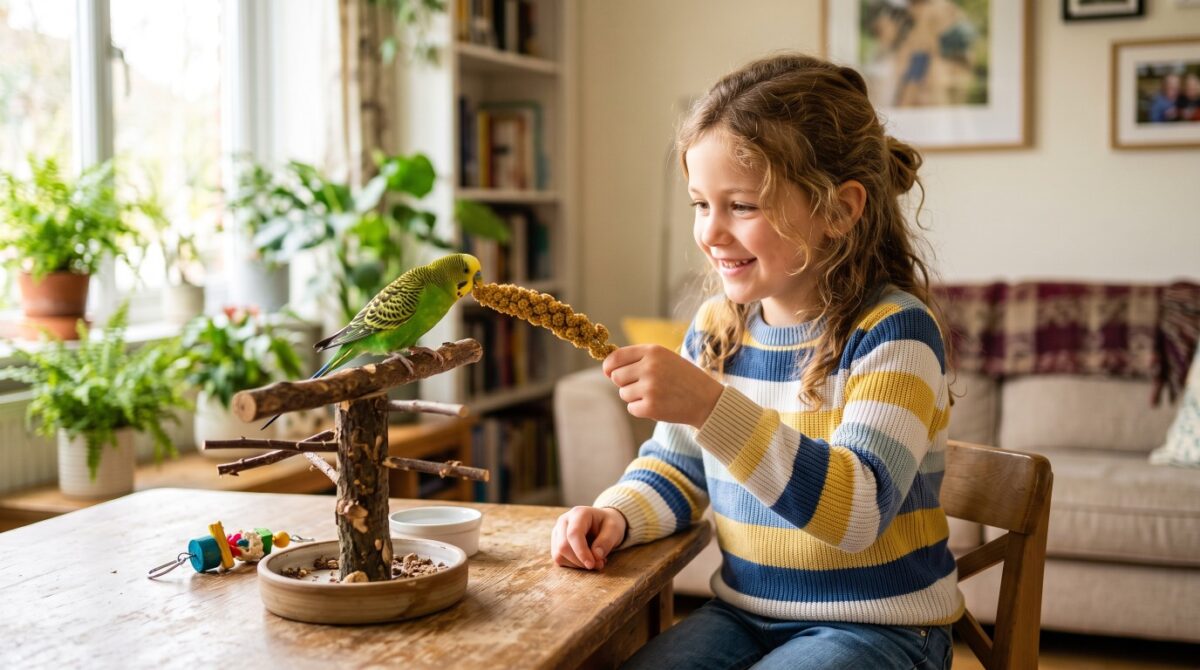
Bringing a pet bird into a bustling family home is a thrilling experience, but it requires careful consideration. Unlike dogs or cats, birds have highly specific needs, long lifespans, and unique communication styles—some of which can involve ear-piercing screams or unexpected nips. If you have children, selecting a bird with a gentle temperament, low bite risk, and manageable noise level is the key to a harmonious household.
In this guide, we break down the eight best pet birds for kids and families, helping you find the perfect match for your home’s energy, space, and lifestyle.
Key Takeaways
- Best for handling: Budgies and Cockatiels remain the gold standard for children who want a hands-on, affectionate, and easily tamed pet.
- Best for observation: “Hands-off” birds like Canaries and Finches are excellent choices for busy families or homes with young, unpredictable toddlers.
- Noise considerations: Noise levels vary wildly; Bourke’s Parakeets and Diamond Doves are ideal for apartments and noise-sensitive kids.
- Hidden health factors: Always consider powder-down allergies (especially with Cockatiels) and the necessity of finding a specialized avian vet.
- Safety first: Adult supervision is mandatory. Even the smallest birds can bite if they feel threatened by quick movements or loud noises.
The 8 Best Pet Birds for Families
1. Budgerigar (Parakeet) – The Best Overall Beginner Bird
Budgies are undeniably the most popular pet bird in the world, and for good reason. These tiny parrots pack an incredible amount of personality into a small frame. They are highly intelligent, playful, and can even learn to mimic human speech.
- Temperament with Kids: Excellent. When hand-tamed, budgies are highly social and rarely bite hard enough to break the skin.
- Noise Level: Low to Medium. They chatter and chirp continuously throughout the day, but they lack the ear-piercing scream of larger parrots.
- Lifespan: 7 to 15 years.
2. Cockatiel – The Most Affectionate Companion
If your child wants a bird that enjoys physical affection, the Cockatiel is a top-tier choice. Known for their expressive crests and bright orange cheek patches, Cockatiels are incredibly gentle and bond deeply with their human flock.
- Temperament with Kids: Very docile. They often enjoy head scratches and will happily ride around on a child’s shoulder.
- Noise Level: Medium. Males are frequent whistlers and can be slightly loud, but they are generally pleasant to listen to.
- Important Note: Cockatiels produce “powder down” (dust from their feathers), which can trigger asthma or allergies in sensitive children.
3. Bourke’s Parakeet – The Quietest Hookbill
Bourke’s Parakeets are a hidden gem in the avian world. Unlike most parrots, they are incredibly mellow, docile, and prefer a peaceful environment. They are most active at dawn and dusk.
- Temperament with Kids: Very gentle, though they prefer to just hang out rather than be aggressively handled or cuddled.
- Noise Level: Very Low. They emit soft, melodic chirps, making them perfect for apartments or children with sensory sensitivities.
- Lifespan: 10 to 15 years.
4. Canary – Best “Hands-Off” Bird for Visual Enjoyment
For homes with very young children or toddlers who might accidentally squeeze or injure a small bird, a Canary is a fantastic choice. They are meant to be seen and heard, not held.
- Temperament with Kids: Hands-off. They are easily stressed by handling but provide wonderful companionship through their presence.
- Noise Level: Low to Medium. Male canaries are renowned for their beautiful, complex songs.
- Lifespan: 10 to 15 years.
5. Zebra Finch – Best for Busy Households
Like Canaries, Finches are hands-off birds. However, they are highly social animals that must be kept in pairs or small flocks. They provide endless entertainment as they interact with each other, flitting rapidly around a wide flight cage.
- Temperament with Kids: Strictly visual pets. Not for handling.
- Noise Level: Low. They communicate with cute, quiet “beep” sounds that sound like a tiny toy horn.
- Lifespan: 5 to 7 years.
6. Diamond Dove – Small, Gentle, and Calming
Doves are vastly underrated family pets. The Diamond Dove is a tiny, peaceful bird that requires a flat-surfaced cage setup rather than climbing bars. They are exceptionally sweet-natured.
- Temperament with Kids: Very docile and unlikely to bite. They can be trained to sit gently on a child’s hand.
- Noise Level: Very Low. They produce a soft, repetitive cooing sound that many find relaxing.
- Lifespan: 12 to 15 years.
7. Green-Cheeked Conure – Best for Older, Responsible Kids
If your family has older children (10+ years old) who want a “big bird personality” in a small package, the Green-Cheeked Conure is an excellent step up from a Budgie. They are clownish, highly interactive, and very smart.
- Temperament with Kids: Playful but boundary-driven. They can be nippy if their body language is ignored, which is why they are not recommended for toddlers.
- Noise Level: Medium. They are the quietest of the conure family, but they can still let out a sharp contact call when excited.
- Lifespan: 20 to 30 years (a long-term family commitment!).
8. Pionus Parrot – The Gentle Medium-Sized Option
For families with the budget and space for a larger parrot, the Pionus is arguably the best choice. They lack the manic energy of a Cockatoo or the intense bonding aggression of an Amazon parrot.
- Temperament with Kids: Calm, steady, and independent. They are less prone to sudden mood swings than other medium-sized parrots.
- Noise Level: Low to Medium. They are relatively quiet for their size, though they can be vocal if startled.
- Lifespan: 25 to 40 years.
Crucial Factors to Consider Before Buying
Before heading to the breeder or rescue, evaluate these family-centric factors:
- Find an Avian Vet First: Birds require specialized care. Before adopting, ensure you have a certified avian vet nearby. You can search for one through the Association of Avian Veterinarians (AAV).
- Hidden Household Hazards: Birds have highly sensitive respiratory systems. Common household items like non-stick Teflon pans, scented candles, and aerosol sprays can be instantly fatal.
- Lifespan Commitment: Many birds will outlive your child’s time living at home. Be prepared to take over the bird’s care when your child eventually goes to college.
Recommended Video Resources
For more visual guides on choosing a family-friendly bird, we highly recommend these excellent YouTube videos:
- “6 Best Pet Birds For Kids” – This video breaks down fantastic kid-friendly pets based on interaction level, lifespan, size, noise level, and aggressiveness. You can watch it here:

- “Top 15 friendliest pet birds you can keep at home” – This video counts down the top 15 pet birds that make the best companions, highlighting playful budgies, affectionate cockatiels, and their specific care needs. You can watch it here: https://www.youtube.com/watch?v=1v4qUDQ6IKg.
Frequently Asked Questions (FAQ)
What is the best age for a child to get a pet bird? Most avian experts recommend waiting until a child is at least 6 to 8 years old before introducing a hand-tamed bird like a Budgie or Cockatiel. At this age, children can understand how to read basic animal body language and use gentle hands. Toddlers do best with “look but don’t touch” birds like Finches.
Do pet birds carry diseases that can affect children? While rare, birds can transmit Psittacosis (Parrot Fever), a bacterial infection that can affect humans. Routine veterinary checks and proper hand-washing after handling the bird or cleaning the cage effectively eliminate this risk.
Which pet birds are the quietest? Bourke’s Parakeets, Diamond Doves, Canaries, and Finches are widely considered the quietest pet birds. They emit soft chirps, songs, or coos, making them highly suitable for apartments or homes with sleeping babies.
What are “powder down” birds, and do they cause allergies? Certain species—most notably Cockatiels, Cockatoos, and African Greys—produce a fine white dust from their feathers to keep them waterproof. This dust can easily trigger asthma or allergies in children. If your family has a history of allergies, stick to South American species (like Conures) or Budgies, which do not produce heavy powder down.
How much does a pet bird actually cost? While a Budgie might only cost $30 to $50, the initial setup (a large, safe cage, toys, perches, and quality pelleted diet) can easily exceed $250. You must also budget for annual avian vet exams, which typically cost between $80 and $150 depending on your location.